South Africa's Development Strategy
The South African government is pursuing a long-term development agenda focused on economic renewal, social cohesion, and environmental sustainability:
South Africa is Africa’s strongest industrial and export economy and plays a key role in multilateral forums such as the African Union, the BRICS group, and the G20. The country has a highly developed financial and service sector, industrial production capacity, and vast reserves of natural resources. At the same time, South Africa is marked by massive social tensions: it ranks among the countries with the highest income inequality worldwide (Gini coefficient > 0.63) and struggles with structural unemployment, particularly among young people.
The demographic dynamics—over 60% of the population is under 30—contrast with limited economic inclusion. While major cities like Johannesburg and Cape Town are globally connected, rural regions and townships often remain disadvantaged. Energy shortages, environmental degradation, and institutional weaknesses exacerbate existing inequalities.
South Africa thus exemplifies the tension between economic potential and social fragmentation—while at the same time offering significant opportunities for a sustainable and equitable transformation.
The South African government is pursuing a long-term development agenda focused on economic renewal, social cohesion, and environmental sustainability:
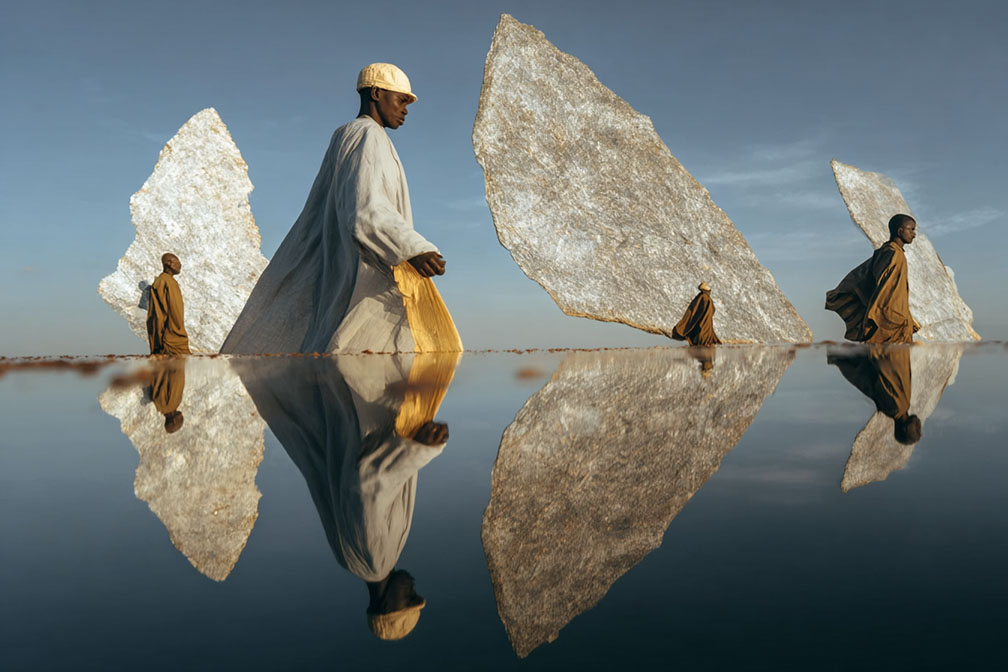
A central strategic vision aimed at reducing poverty and inequality, promoting productive employment, and advancing environmental justice.

A framework for a socially responsible transition from fossil fuels to a green economic model—with a focus on employment, reinvestment, and local resilience.
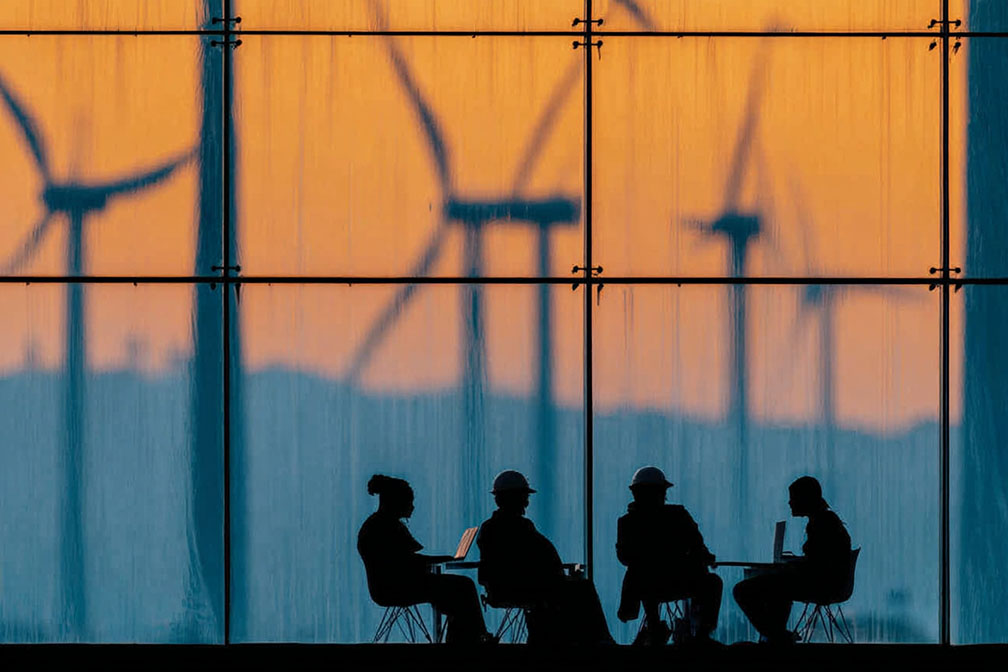
Energy Master Plan for Diversifying the Electricity Mix: Reducing dependence on coal, expanding solar, wind, and hydroelectric power, and developing storage technologies.
Strengthening decentralized planning capacities and regional coherence—with a focus on basic social services, infrastructure, and economic development at the district level.
These policies are designed to complement one another: The NDP sets the long-term direction for development, while the energy, climate, and decentralization strategies open up practical pathways for implementation—for example, by linking job creation, climate protection, and structural change in the mining sector.
South Africa has an unemployment rate of around 32% (with youth unemployment exceeding 60% in some areas). The structural divide between the formal and informal sectors, as well as persistent educational deficits, hinder social mobility and have a divisive effect on the community.
Frequent power outages (“load shedding”) are having a negative impact on the economy, public health, and education. The national power grid is outdated, and the reliance on coal (more than 75% of the energy mix) is hindering the transition to a climate-friendly energy future.
Despite its technical capabilities, South Africa is suffering from increasing water shortages, particularly in urban growth centers. Environmental pollution, acidic mining wastewater, and invasive species are putting pressure on ecosystems and the population.
Historically entrenched spatial inequality—between city centers and the outskirts, between provinces, and among racialized communities—remains one of the most significant barriers to development. Shortages in infrastructure and housing exacerbate tensions.
South Africa is a founding signatory and pilot country of the international Just Energy Transition Partnership (JETP) with Germany, France, the EU, the UK, and the US. The country is receiving over $8.5 billion for a socially just phase-out of coal and the expansion of renewable energy.
Programs with the World Bank, the Green Climate Fund, and the African Development Bank support sectoral reforms—including in the areas of green industry, vocational training, agriculture, and water security.
South Africa is an active contributor to Agenda 2063 (AU), a partner in the BRICS network, the host of UN regional programs (e.g., the UNEP Africa Office), and a hub for climate research, biodiversity monitoring, and urban innovation pilot projects.
South Africa is not a typical recipient of multilateral development cooperation—but rather a globally visible partner for structural change in the Global South.
The Green Nations Foundation operates in South Africa across four strategic focus areas:
– Anchoring the Just Transition at the local level
Supporting local planning capacities in former coal-mining and mining regions to promote alternative employment and sustainable economic sectors.
– Water and Resource Conservation in Urban and Peri-Urban Areas
Integration of nature-based solutions, wastewater recycling, and neighborhood infrastructure in metropolitan regions affected by water scarcity, such as Gauteng and Cape Town.
– Vocational training for green industries
Collaboration with training centers, universities, and incubators to provide young people with training in solar installation, building efficiency, the circular economy, and energy technology.
– Local climate resilience & biodiversity corridors
Support for participatory projects in coastal and savanna regions—such as invasive species management, urban cooling measures, reforestation, and biodiversity monitoring.
.jpg)
.jpg)
.jpg)
.jpg)
.png)